Water beside the house
Record where it starts before assuming a perimeter drain or structural repair is the answer.

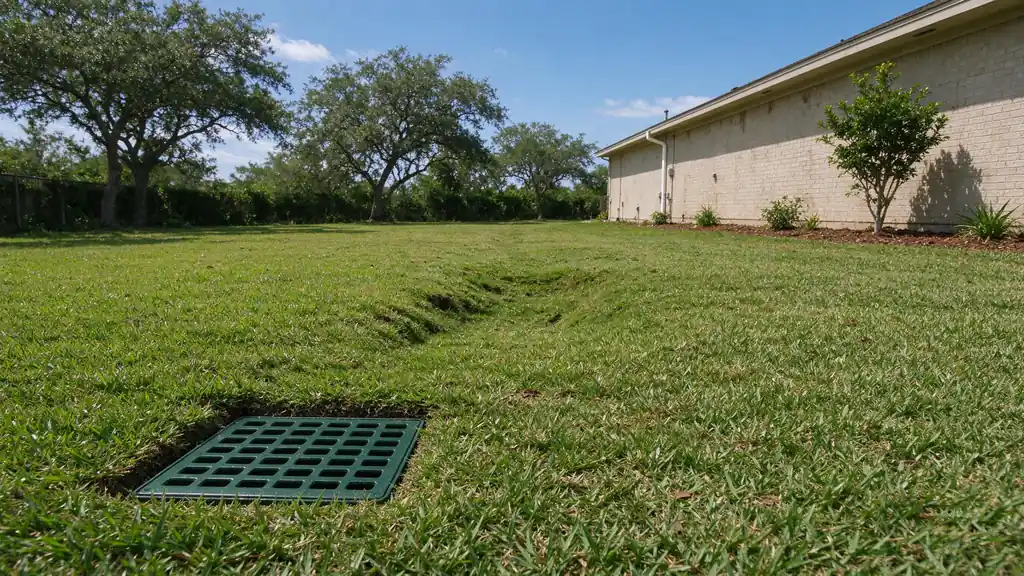
A usable yard starts with a workable route for the water.
Yard drainage, French drains, grading, roof runoff and hardscape collection.
Start with the source. Keep the outlet in the plan.Record where it starts before assuming a perimeter drain or structural repair is the answer.
Compare rainfall timing, roof discharge and soil-water movement before choosing a collector.
Check finished levels and interception before a driveway or patio sends water toward an opening.
Distinguish a blocked inlet, a damaged route and receiving water that has nowhere to go.
Private property drainage in Corpus Christi
Quay plans drainage around the source, the route and the receiving outlet. A new grate is useful only when the rest of that path works.
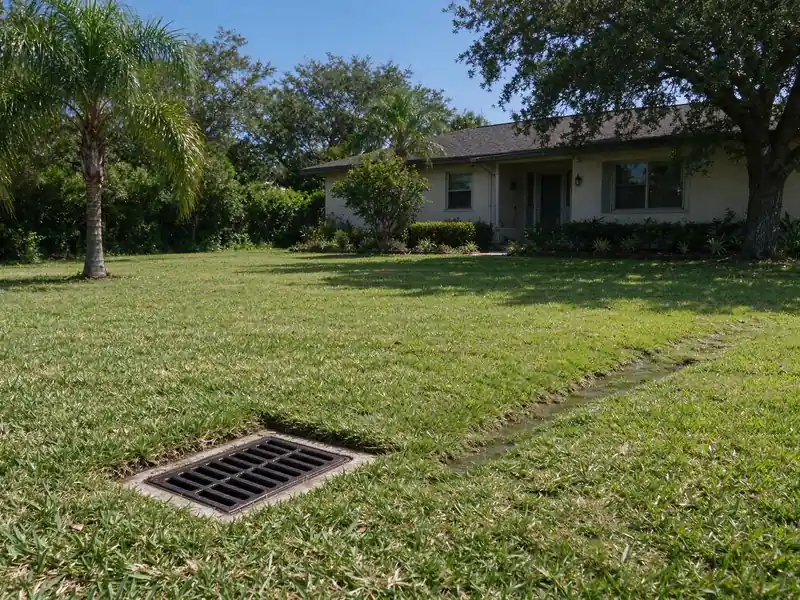
Look at grading, swales, catch basins and channels.
Assess subsurface collection, soils and a feasible outlet.
Inspect the receiving point before adding another collector.
Quay offers yard drainage for private properties in Corpus Christi. A lawn drain starts with the whole water path.
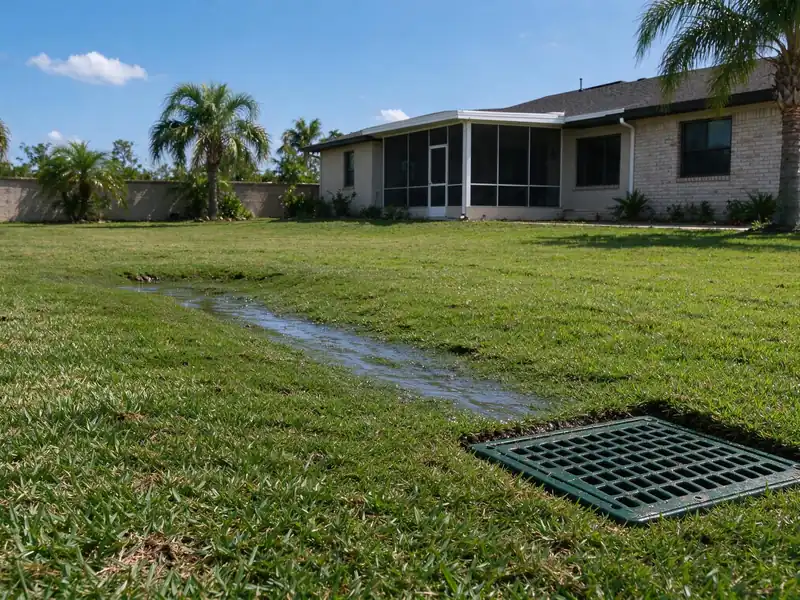
Explore yard drainageA low spot can collect roof water, runoff from paving, water moving across a neighboring lot or rainfall that cannot soak in quickly enough. The place where water stands is useful evidence, but it may be several yards from the cause. Start by recording where flow enters, how deep it becomes and how long it remains after the rain stops.
| Collection method | What it receives |
|---|---|
| Catch basin | A catch basin receives surface flow at a point. |
| Shallow swale | A shallow swale moves runoff across the landscape. |
| Subsurface collector | A subsurface collector addresses water within the soil. |
These methods solve different problems, and a yard may need more than one. Adding a buried pipe without fixing the surface route can leave the same puddle in place.
Before choosing a grate or pipe, establish where the collected water can go. The route needs suitable elevations, a receiving area that can accept flow and any required approvals. The proposal should also explain excavation access, debris control, testing and how disturbed turf or planting beds will be restored.
Maintenance access belongs in that plan too, so cleaning a basin does not require digging it up.
French drain installation through Quay starts with an identified soil-water collection need. Collect water in the ground where that is the actual problem.
Explore french drain installation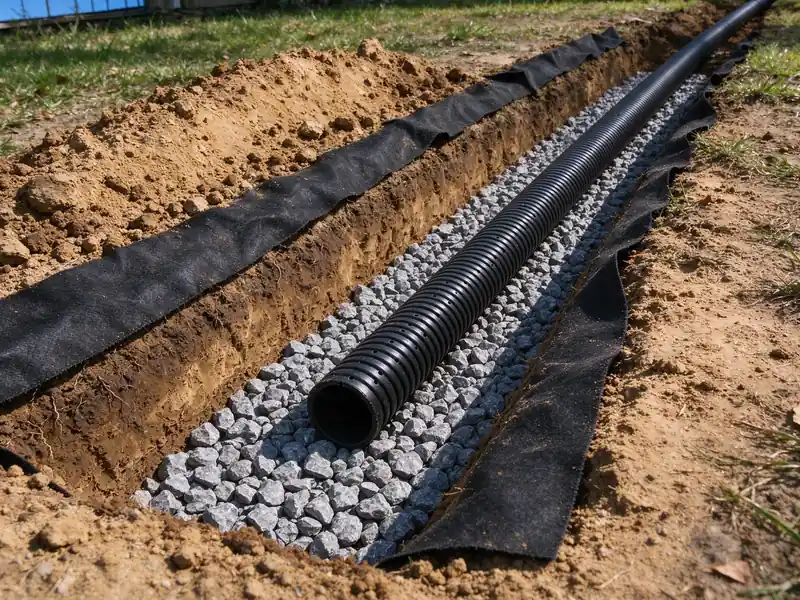
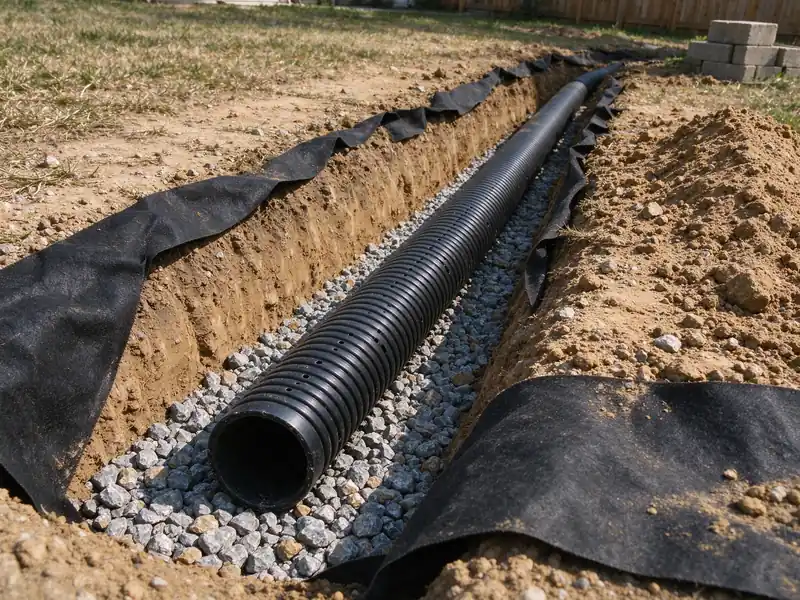
A French drain uses a permeable collection zone around a perforated pipe to receive water within the soil. It can intercept water moving toward a foundation or through a persistently wet area. It does not automatically replace surface grading or a basin that needs to receive fast runoff from a patio. A curtain interception section belongs to this same scope when its position follows a demonstrated water path.
The collection pipe is only one part of the system. Water still needs a suitable route to an approved discharge point. Solid conveyance pipe may be appropriate after the collection zone. Connections, pipe fall, access for cleaning and the relationship to roof-water lines need to be considered together rather than specified as isolated parts.
Quay offers grading and swale work where a usable surface route can be established. Sometimes the useful change is above ground.
Explore grading and swales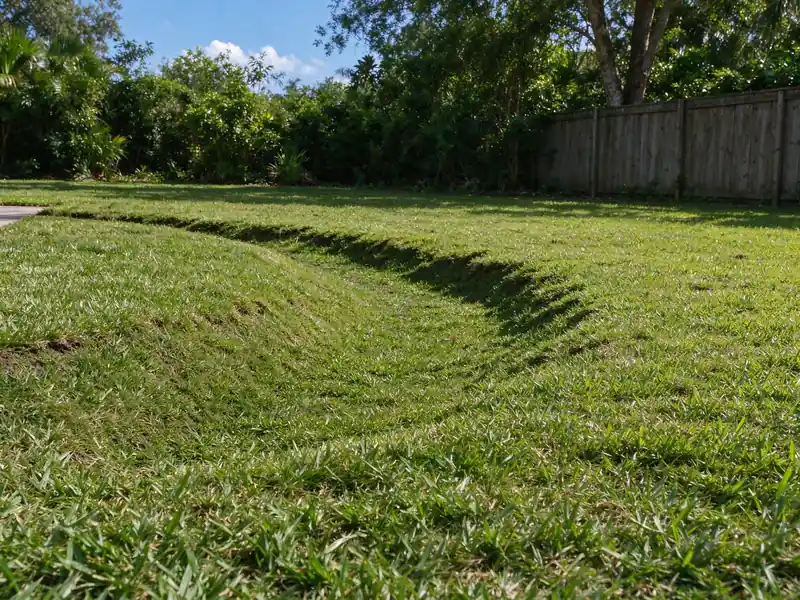
A small ridge, settled planting bed or new section of paving can change the route that water takes. Grading adjusts the surface so runoff has a deliberate path. A swale carries that flow through a shallow depression. The design needs to account for usable yard space, erosion, landscape maintenance and nearby structures.
Moving water off one low spot is not enough if it creates another problem at a fence or property line. Existing drainage paths, easements and historical neighboring flow need attention. Qualifying construction projects in the city may have drainage-plan or survey requirements. The applicable approval path depends on the project and location.
Quay plans downspout drainage beyond the roof system, keeping collection and discharge distinct. Give roof runoff a deliberate route.
Explore downspout drainage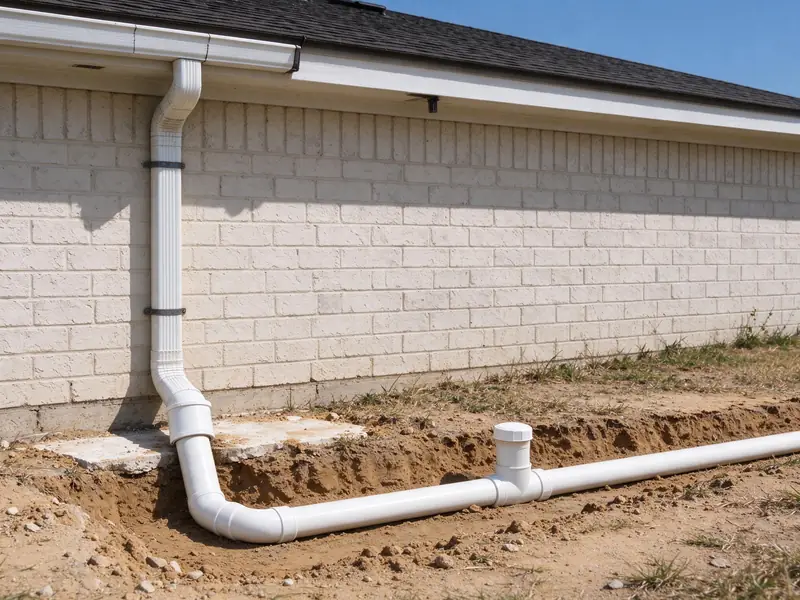
A downspout concentrates rainfall from a large roof area into a small discharge point. If that point is beside a foundation, walkway or low planting bed, relocating the discharge can be part of the solution. First check the gutter and the connection so an upstream blockage is not mistaken for a yard-drain failure.
A buried roof-water line generally needs to convey the water to a suitable outlet. It should not be confused with a perforated collection trench. The layout should allow inspection and cleaning, account for leaves and debris and avoid connections that make another collector overflow. Existing irrigation and private utility lines can affect excavation access.
A pop-up emitter is an outlet component, not a destination that can accept unlimited water. The surrounding grade must allow discharge to move away without flooding a nearby low spot. If the outlet is submerged or the route lacks usable fall, another approach needs assessment.
The estimate should explain the discharge location and restoration as clearly as it explains the pipe length. Gutter replacement itself is outside this drainage scope.
Channel drain installation through Quay addresses linear surface interception at private hardscape. Intercept water where hardscape concentrates it.
Explore channel drain installationA channel drain receives flow along a narrow line, often beside a driveway, garage approach or patio. Its position depends on where water actually travels and what needs protection. A grate placed beside the flow path can miss the runoff even when the pipe beneath it is clear.
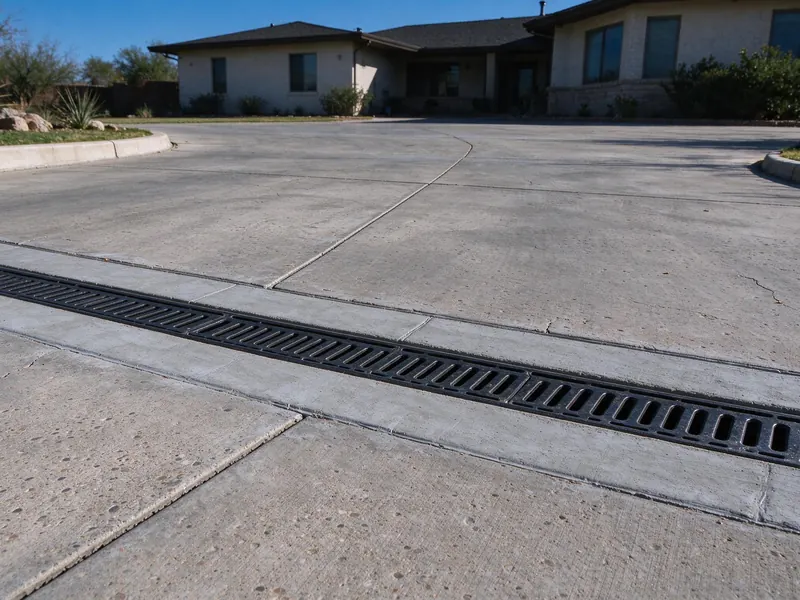
The channel outlet must connect to conveyance with suitable capacity and a feasible discharge. Debris capture, cleaning access and the possibility of water backing up from the receiving point all affect performance. Where work reaches a curb or public right of way, confirm the approval route before cutting concrete.
A drainage assessment should also consider whether surface grading would solve the problem with less disruption, or whether both methods are needed together.
Begin with the water pattern, the property and the access. The assessment should establish the collection need and the receiving route before a product is selected.
Put collection, pipe routing, outlet approvals and restoration in writing. Keep allowances and exclusions visible so changes are discussed while the choices are still open.
The installation scope should include appropriate checks before backfill and identify future cleaning access. Agree on what the completed surface and maintenance information will include.
Get an Estimate with the property details and what you have observed.
| Area | What changes the drainage decision |
|---|---|
Flour Bluff | Sand over clay and two receiving basins. |
Southside / Oso Creek | Broad gentle basin, open ditches and receiving-system limits. |
North Beach | Coastal/public drainage limits and separate private lot work. |
Portland | Separate jurisdiction and public drainage authority. |
North Padre Island | Qualifying island infill survey, final-grade and approved-discharge requirements. |
Confirm conditions and approvals for the property. Calallen, Annaville, Central Corpus Christi and Bay Area are covered as named areas. Conditions and project requirements are confirmed for the property.
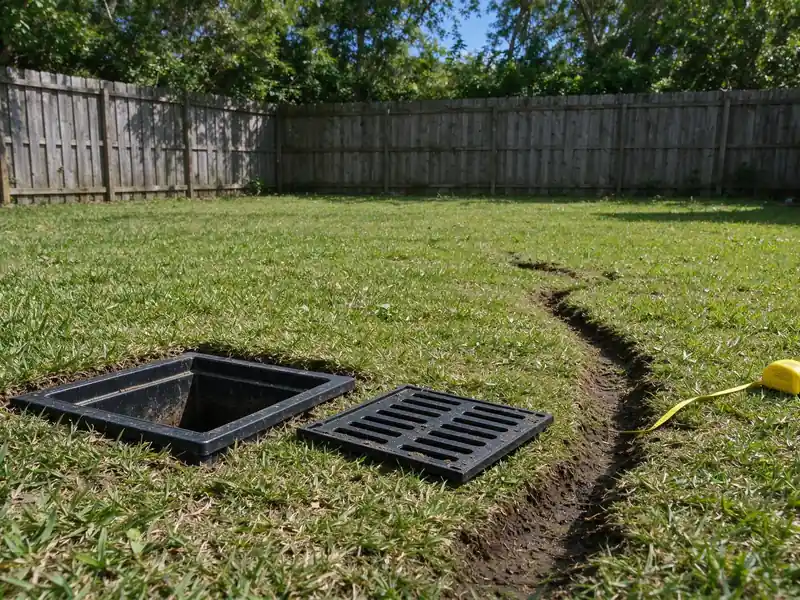
Compare the collection method, test the receiving route and understand the work before choosing an installation.
A useful drainage plan connects the source, collection point, conveyance route and receiving outlet. Start with where water enters the property rather than selecting a drain from a photograph. Roof runoff, paved surfaces and wet soil can call for different collection methods even when they affect the same lawn.
The receiving point controls whether the route can work. Check elevations, access for cleaning and where excess water travels when collection is overwhelmed. In Corpus Christi, distinguish a private lot problem from elevated receiving water or a wider drainage problem. The complete guide brings those decisions together before an estimate becomes an installation scope.
Water moving over paving or across a lawn needs an inlet or shaped surface route that can actually intercept it. A buried perforated pipe is not automatically a substitute for a grate at the point where fast runoff collects. Watch the direction of flow before choosing the collection location.
A French drain receives water through a permeable trench and carries it toward an outlet. It can address subsurface movement while leaving a separate surface-flow problem unresolved. A property may need both methods, but each should have a defined job. Compare the source, collection depth and receiving route rather than treating every wet patch as the same installation.
| Catch basin | A catch basin receives surface water through a grate at a specific location. Its position must follow the flow path, and debris needs somewhere accessible to collect. A basin can look clear from above while the pipe leaving it remains blocked or the receiving outlet is backed up. |
|---|---|
| French drain | A French drain collects water along a permeable trench within the ground. Filter selection, surrounding material and the pipe route affect that collection. These systems can connect through a designed conveyance route, but adding more inlets does not create discharge capacity. The useful comparison is what each collector receives, how it can be cleaned and where its water goes. |
Perforations let water enter the collection pipe through the surrounding drainage material. That is useful where the trench is meant to receive soil water. The filter and stone are part of the collection arrangement, rather than decorative fill around an otherwise complete pipe installation.
Solid pipe carries collected water between points without intentionally releasing it along the route. Roof-water connections and downstream conveyance should be assessed with that distinction in mind. Ask where collection ends, where solid conveyance begins and how either section is reached for cleaning. The choice follows the water problem and the route, not simply whichever pipe is cheapest per foot.
Yard runoff and roof water belong to a different problem category from wastewater leaving toilets, sinks and other plumbing fixtures. A yard inlet that overflows during rain does not establish that a sanitary sewer needs repair. Likewise, a plumbing backup inside the building should not be diagnosed from the appearance of a lawn drain.
Record which fixtures or collection points are affected and when the problem occurs. Existing connections need identification before anyone proposes combining lines or excavating an assumed route. Quay addresses private-property drainage; sanitary sewer repair is outside this scope. The guide explains how the source and affected outlets help identify the appropriate investigation without guessing from a drain cover alone.
Gravity drainage depends on the relationship between the collection point, the route and the receiving water level. A deep trench alone does not prove there is usable fall. If the receiving outlet is too high or becomes submerged, an otherwise clear pipe may have nowhere useful to discharge.
Surface changes, tested infiltration or a properly assessed pumped arrangement may deserve consideration, depending on the property. Each has limits: infiltration needs suitable ground conditions, while pumping adds power, controls and maintenance.
Start with measured elevations and receiving conditions before paying for a longer pipe. The guide explains why a proposed outlet needs an assessment rather than a promise that water will somehow disappear.
A dry well stores water while it infiltrates into surrounding ground. A rain garden uses a shallow planted area as part of a surface-water strategy. Neither creates unlimited receiving capacity, and a hole filled with stone can remain full when the surrounding soil cannot accept water fast enough.
Water entering beside a fence may be following an existing surface route rather than originating at the nearest visible puddle. Record where it approaches, where it crosses and what happens farther downstream. Photographs from your property and a plan of visible flow paths are more useful than assumptions about who caused the problem.
Check existing drainage paths and any easements before a proposal changes levels at a boundary. Avoid treating a berm or pipe as a complete solution if it redirects the same water onto another property. The guide explains the physical questions to document and the scope information to request; it does not decide property rights or replace legal advice.
A blocked inlet, settled surface or damaged pipe can stop water moving across an individual property. Those defects deserve a specific assessment. Compare where water first appears with the condition of the inlet and the receiving point, rather than assuming every rain-related puddle has the same cause.
When water outside the property rises above the discharge point, adding another collector cannot lower that receiving water. Coastal flooding and wider drainage-system limitations therefore require a different expectation from a private yard improvement.
Quay cannot promise protection from those events. The guide separates a repairable collection or route defect from conditions beyond the lot so the proposed work has a clear, realistic purpose.
From a safe position, record the approach of the water, the area where it stands and the point where it normally leaves. Note whether the problem begins while rain is falling or persists after nearby surfaces have drained. Photographs taken at different stages can distinguish a brief collection point from a route that stays backed up.
Include downspouts, paving edges and visible inlets in the record, without entering flooded areas or opening covers in flowing water. Note recent landscape or paving changes and whether an existing drain previously worked. The guide explains what to observe so an assessment begins with the water pattern, rather than a request for a particular drain product.
A French drain can struggle because water never reaches its collection zone, sediment restricts that zone, the pipe is damaged or the receiving outlet is blocked. Those are different defects. More gravel will not correct an uphill pipe section, and clearing an outlet will not turn a subsurface trench into a surface inlet.
Compare the water pattern with the intended collection area, then identify accessible connections and the discharge point. Inspection findings should explain whether cleaning, a local repair, surface adjustment or replacement is justified. The guide follows that diagnostic sequence so the proposed work addresses a demonstrated failure rather than replacing an entire line simply because the yard remains wet.
Keep a record of inlet, cleanout and outlet locations so maintenance does not begin with unnecessary digging. Follow the selected product instructions for opening and cleaning components.
Do not enter chambers or use improvised high-pressure methods on an unidentified system. The guide distinguishes accessible upkeep from work that needs inspection, including repeated blockage, damaged pipe and a receiving point that remains backed up.
Do not assume that a private yard project allows a curb cut, street connection or work in a public drainage area. Establish where the proposed route ends and whether excavation reaches the public right of way. The receiving point and the property jurisdiction belong in the scope before concrete is cut.
Corpus Christi guidance includes survey and drainage requirements for qualifying development, including certain infill, island and ETJ projects. That does not mean every lawn repair needs the same approval package.
Confirm the project category, existing flow and proposed surface changes with the relevant authority. The guide connects those checks to the outlet decision without treating a general rule as approval for a particular property.
Agree on access, excavation limits and the proposed collection and discharge points before equipment changes the ground. Utility location and the identification of private lines are separate coordination tasks. Existing paving, fences and planted areas can affect how the work reaches the route and how excavated material is handled.
The installation scope should address supporting material, connections, cleaning access and a completed-system check before backfill hides the work. Restoration then needs its own description: what happens to removed paving, surplus soil, turf and planting beds.
The guide follows the work through those handoffs so the estimate describes a finished property improvement, rather than only a pipe placed in a trench.
An estimate should connect the diagnosed source to the proposed collection method, route and receiving outlet. Ask which observations or measurements support that choice and which conditions remain unresolved. Two offers with the same pipe length may describe different excavation, inlet, access or restoration work.
A per-foot figure cannot describe the whole drainage job. Depth, access, collection components, receiving-outlet work and surface restoration can change the total even when pipe lengths match. Concrete removal and vehicle-rated channel details are different cost drivers from a shallow trench across an accessible lawn. French-drain depth, channel support, catch-basin access and the area of grading describe different work, even on one property.
The budgeting ranges shown below are national context, not verified Corpus Christi quotes or Quay rates. An assessment must establish what the property needs before those figures are useful.
Compare estimates by the same collection method, excavation limits, discharge arrangement and finish. The cost guide explains those inputs and the unresolved items that should be stated before a price is treated as a complete proposal.
Use the planning tools to organize an estimate. National figures are context; the property determines the work.
Drainage cost estimatorYard drainage assessment$10-$50 per linear foot · exterior French drain
$30-$150 per linear foot · channel drain
These are national planning ranges. Excavation, loading, outlet work and restoration vary. Other services carry cost drivers until suitable price evidence is available.
No. Quay’s drainage scope concerns the water route beyond the roof system. New gutter installation is a separate trade and should not be assumed to be included in a downspout drainage proposal.
No. Wastewater and sanitary sewer repair are outside this site’s offered scope. Describe the source and affected fixtures so a request is not mistaken for ordinary rainwater drainage.
Yes. Private commercial drainage is included. The proposed scope should account for access, traffic loading, occupied areas and maintenance responsibility. Municipal civil construction is excluded.
Yes. Describe what happens at the property and when it occurs. An estimate request can begin with the water pattern rather than a product name; the assessment still needs to establish which work is appropriate.
A coordinated request can identify both the proposed finished levels and the receiving route before paving decisions are fixed. State which contractor is responsible for each part rather than assuming a drainage proposal includes the whole patio build.
You can ask about the scope, but permission to inspect or alter the property must come from someone authorized to give it. Identify whether you are the owner, tenant or property manager before access is arranged.
No. An accepted request confirms receipt only. An appointment, project price and start date still need to be arranged. Do not treat a form confirmation as permission for work to begin.
No emergency attendance or after-hours answering promise is made here. A hazardous condition or flooding affecting public infrastructure needs the appropriate emergency service, utility or public authority.
Identify fixed equipment and access restrictions in the request. Do not move utility equipment, dig for lines or dismantle a fence before the scope and responsibilities are agreed.
No. Foundation-area drainage concerns water collection and routing. Structural movement, foundation stabilization and building repairs are outside this drainage scope and need their appropriate assessment.
Private-property water management for homes and commercial sites. Begin with what the water is doing and what the property can support. The scope stays clear about the limits of lot-scale drainage.
Drainage planning worksheetFrom the field notesShare the problem area, what happens during rain and whether an existing drain is present.
Corpus Christi and selected surrounding areas
Mon-Fri 8am-6pm
Sat-Sun 9am-2pm
Central time
Outside these hours: submit an estimate request.
Tell us what happens, where the property is and what access or outlet information you have. A request does not confirm an appointment or price.