
A sandy surface does not settle a Flour Bluff drainage decision. Quay Corpus Christi Drainage offers private-property drainage in Flour Bluff, with the collection method and outlet considered together. The important question is how water moves through this particular property, including what lies below the surface and what receives the discharge.
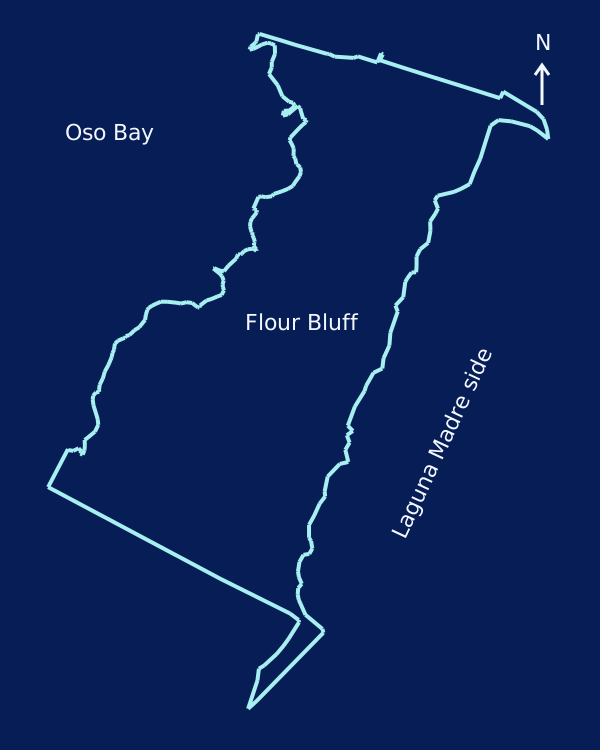
The area’s geography makes that distinction useful. The FEMA flood insurance study describes fine sand over clay at varying depths and drainage toward either Cayo del Oso or Laguna Madre. Those are area conditions, not a diagnosis of your lot. They are a reason to check the ground and receiving route before choosing a drain.
Start with what happens on your lot
A yard that becomes wet only during heavy rain presents a different investigation from an area that remains wet through dry weather. Record the sequence from a safe position: where water approaches, which surfaces contribute, where it stands and how it leaves. Include any recent paving, planting or fence changes that could have interrupted the earlier path.
A driveway edge, roof outlet and low lawn can all feed the same visible puddle. Treating only the lowest point can miss that combination. The standing-water guide helps organize observations, while an inspection request can describe the levels, connections and outlet questions that remain unresolved.
Do not enter moving or contaminated water to obtain photographs. If the affected area includes a public street, damaged utility or a condition beyond the property, keep that information in the request. A private yard proposal cannot promise to correct the capacity of the surrounding public system.
Look below the sandy surface
The local sand-over-clay context matters because infiltration depends on the layers that receive the water, not just the soil visible beside a flower bed. A shallow sandy layer can look promising while slower ground beneath it limits how quickly stored water can leave. Imported fill and earlier construction can create further differences within one lot.
That is why an infiltration proposal needs actual site evidence. A dry well stores water while the surrounding ground accepts it; storage alone does not make the water disappear. Ask how the ground will be evaluated, where overflow would travel and whether the proposed depth approaches groundwater or an unsuitable soil layer.
The dry-well and rain-garden guide explains those conditional choices. Quay does not treat every Flour Bluff property as suitable for infiltration, and a sandy appearance is not an installation specification. If an approved piped outlet is the better option, collection still needs to match the water source.
Keep the receiving side in view
The local drainage divide described in the FEMA study is a useful reminder that neighboring properties do not necessarily share the same receiving route. The directions toward Cayo del Oso and Laguna Madre provide basin context; they do not authorize a direct connection to either water body.
A proposed gravity line needs usable elevation difference all the way to its receiving point. An outlet that becomes submerged can prevent discharge even when the pipe itself is clear. A deeper excavation or an extra inlet does not lower receiving water outside the property.
Separate that limit from a correctable defect inside the lot. A crushed pipe, settled surface or obstructed inlet may be repairable. Wider flooding or elevated receiving water calls for different expectations. Our private-drainage and coastal-flooding guide explains why a yard improvement is not a storm-surge protection promise.
Choose work that addresses the source
Surface grading and swales can restore a usable overland route where surface levels are the problem. They need room to meet unchanged ground without moving the same water onto a neighbor. Collection points should follow the flow rather than force water toward a convenient trench location.
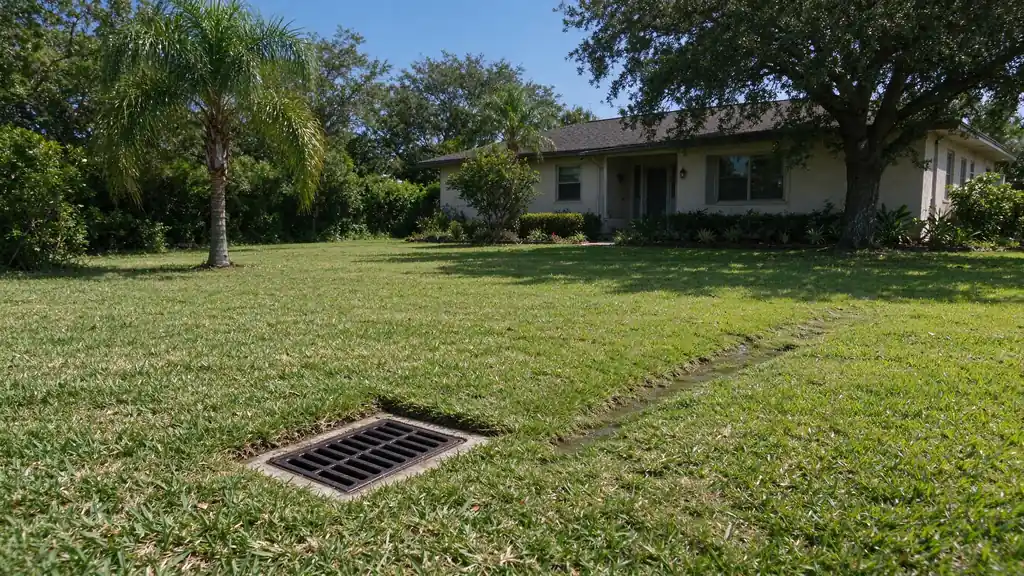
A French drain may be useful for an identified subsurface collection zone. A catch basin receives water through a surface grate, while solid conveyance carries collected water toward the outlet. These components can work together, but their functions and maintenance access should remain clear in the proposal.
Roof water deserves its own check. A downspout discharging against the building or onto paving can concentrate flow in a small area. Downspout drainage concerns the route beyond the roof system; new gutter installation and sanitary sewer repairs are outside Quay’s drainage scope.
Get an Estimate
Tell us what happens, where the property is and what access or outlet information you have. A request does not confirm an appointment or price.
Plan a Flour Bluff project around real access
Use the property address, gate width and visible route to describe access. A location near Waldron Road or Flour Bluff Drive is useful for identifying the property, but a nearby road does not establish the ground conditions or the legal outlet. Confirm the actual parcel, jurisdiction and any public right-of-way involvement.
Where work passes a narrow gate or crosses a finished patio, equipment access and surface restoration can be as important as trench length. Identify private irrigation and electrical lines before excavation planning. Public utility markings and private-line identification are separate tasks, and neither should be inferred from a neighbor’s earlier project.
The written scope should describe proposed collection, conveyance and discharge, then explain access, approvals, testing and restoration. Ask what happens if excavation reveals a different existing connection or ground condition. Resolving the change before it is buried makes the finished arrangement easier to understand and maintain.
Confirm approvals for the actual change
Corpus Christi Development Services is the place to confirm relevant development and grading requirements for a city project. Work involving a public right of way or receiving system can add a separate authority and approval path. A fence line or the edge of existing paving is not proof of the public/private boundary.
The city’s flood-risk guidance includes obtaining a permit for regrading a lot away from buildings. The specific application and documentation still depend on the work. Qualifying infill requirements should not be applied automatically to every small repair simply because the property is in Flour Bluff.
Use the permits-and-outlets guide to prepare questions rather than treating a general explanation as permission for a particular address. The selected contractor’s scope should identify who confirms approvals and what must be settled before work begins.
Compare a complete finish, not just pipe length
There is no verified Flour Bluff installed-price band in this planning information. National exterior French-drain context is $10–$50 per linear foot, but it does not account for this lot’s outlet, excavation, access or restoration. Ask for those items separately before comparing a length-based illustration with an actual proposal.
A useful scope should also explain how the installed route will be checked and where future cleaning takes place. Keep a record of inlet, cleanout and outlet positions. If water patterns change after planting or paving work, that record helps identify whether the source changed or the existing route needs attention.
For a project in Flour Bluff, request an estimate with the address, timing of the water problem and any known outlet. You do not need to select a drain product first. Nearby coverage includes Southside and Oso Creek and North Padre Island; their local decisions have separate explanations.