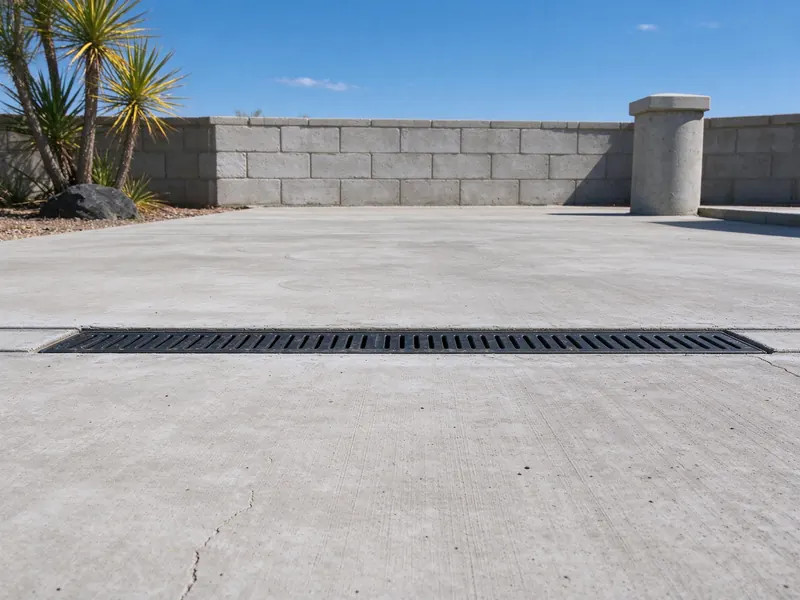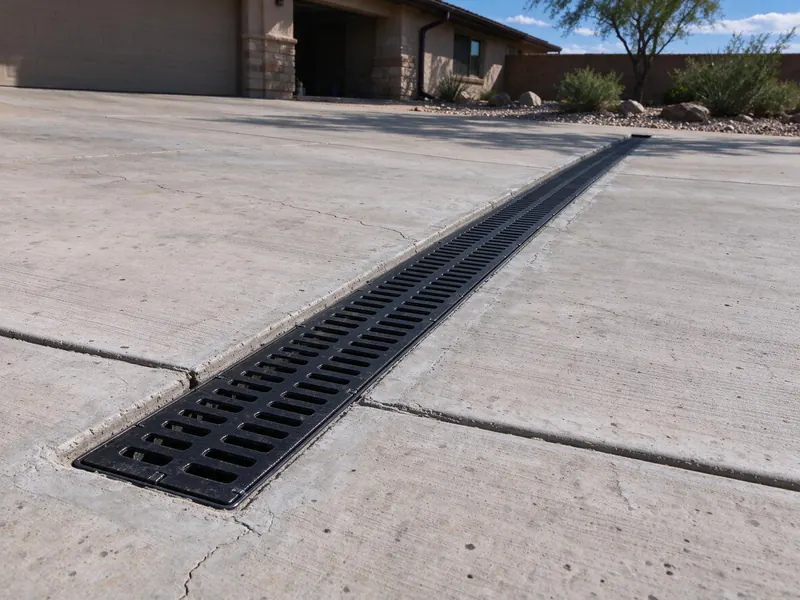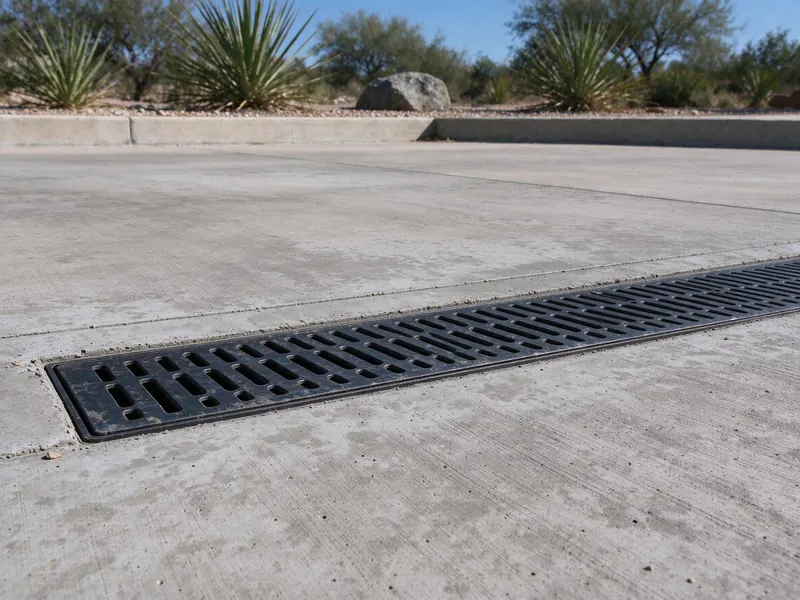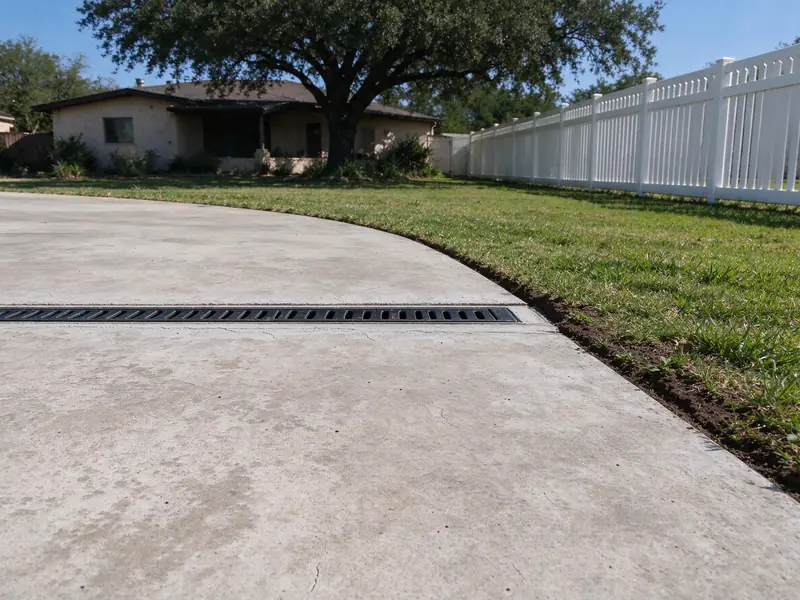
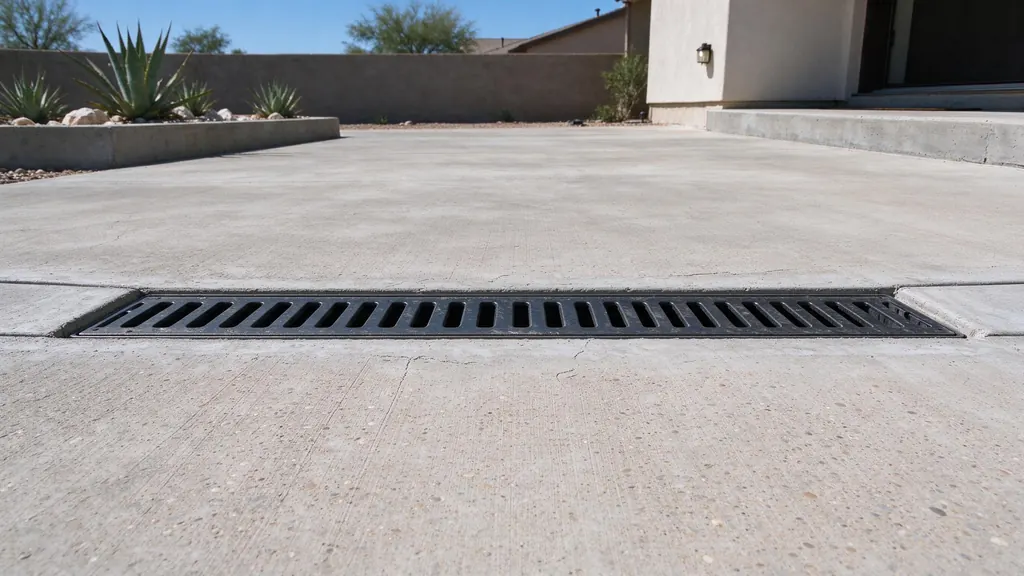
Driveway and patio drainage concerns how water crosses, collects beside or leaves private hardscape. Quay offers drainage assessment and installation in Corpus Christi where finished levels, interception or connected conveyance need attention. A useful proposal identifies the paved surface, surrounding ground and receiving route together. It should also make clear whether the work changes drainage components, changes the slab or coordinates with a separate paving project.
A channel at a garage edge, a basin beside a patio and a change of surface fall address different situations. The visible location of a puddle does not settle which is appropriate. Start with the standing-water guide if you need a clear record of where runoff arrives and what happens next.
Trace driveway and patio runoff
Look at the entire contributing area, not only the place where water stands. Roof outlets, higher ground and adjacent paving may all send water toward the same edge. A patio can receive runoff from beyond its own footprint. Record whether water crosses the surface, gathers at a joint or arrives from the lawn beside it.
Assess the receiving side as well. Water leaving a patio should not simply become a concentrated discharge beside another wall or property boundary. The yard drainage service covers the wider landscape route, and the neighbor-runoff guide helps document cross-boundary contributions. A private hardscape proposal should not assume control over street levels or a public drainage system outside the property.
Compare interception with changing finished levels
A linear channel can intercept crossing water where a line inlet fits the flow. A point basin can receive a localized surface route. Regrading adjacent ground or changing the paved surface can address a broader fall problem. The available elevations and intended use of the area should explain the choice, rather than the appearance of a preferred product.
Read channel drain installation for the linear-inlet scope and catch basin installation for point collection. If the surface itself falls toward an opening, adding an inlet may leave the underlying fall unchanged. Discuss how water travels if the inlet is partly obstructed and whether an alternative overflow route can be maintained.
Keep private paving separate from street drainage
The driveway entrance may meet a curb, sidewalk, roadside ditch or other public feature. That transition can constrain both the proposed levels and the outlet. Do not assume that a private contractor can cut a curb or alter public right-of-way as part of ordinary yard work. Confirm the applicable authority and the exact limits of the private project.
The permit and outlet guide explains why a convenient receiving location is not automatic permission to connect. Public street ponding can also reflect conditions that a private driveway drain cannot correct. A proposal should distinguish protecting or collecting water on the lot from increasing the capacity of municipal infrastructure.
Match support to traffic and use
Vehicle areas need drainage assemblies and surrounding construction appropriate to their expected loading. The grate, channel body, base and adjoining paving form a system. A product rating does not describe the installation quality at a cut edge or transition. Ask how support will be provided and which traffic conditions the specified assembly is intended to accommodate.
Patios have different use considerations, including walking routes, furniture placement and cleaning. Grate openings and transitions should suit the space without becoming inconvenient obstacles. A drain placed beneath fixed furniture or later covered by a mat can lose its collection function. Discuss the finished layout and access for cleaning before deciding where the inlet should sit.
Define cutting and reinstatement
A retrofit can involve saw cuts, removed concrete, excavation, new support and a patch around the drainage assembly. The disturbed width may exceed the visible grate. Ask what happens to existing joints, reinforcement and nearby embedded services. Where information is uncertain, the proposal should identify that uncertainty and the process for agreeing any necessary change.
Drainage installation does not automatically include a new uniform finish across an entire driveway or patio. Confirm whether the agreed result is functional reinstatement, matched paving where available or preparation for separate resurfacing. The installation and restoration guide helps make those distinctions explicit. Avoid relying on a photograph of a finished drain to define the extent of paving work in your own quote.
Establish the pipe route beyond the hardscape
Collected water still needs a continuous route to a suitable receiver. The connected pipe may cross lawn, a side yard or another paved area. Available fall, bends, utility conflicts and the receiving level can affect the solution more than the visible drain length. An unknown existing pipe should be assessed before it is treated as a usable outlet.
Solid conveyance and perforated collection have different jobs. The pipe-function guide explains why collected patio or driveway runoff should not be sent into an unspecified perforated route beside a problem area. If gravity discharge is doubtful, compare the no-outlet options before a slab is cut for a system that cannot empty.
Coordinate drainage before new paving
For a planned patio or driveway project, agree finished levels and the drainage destination before the surface is constructed. Reserve space for collection, pipe connections and future maintenance. Identify which contractor sets each level and which scope includes the connection between drainage and paving. A gap between two proposals can otherwise leave a complete-looking surface without a finished water route.
The patio planning article covers that coordination. Share the intended use, thresholds, access and nearby roof outlets early. Later changes to paving height or edging should be checked against the drainage plan. A system selected before those details are fixed may need reconsideration if the finished surface changes.
Compare cost and ongoing responsibilities
There is no verified local installed band for a complete driveway or patio drainage project here. Cutting, excavation, load-appropriate assemblies, connections, receiving work and restoration all affect the price. Published national channel-drain context in the cost guide is not a quotation for rebuilding hardscape or correcting every surface-level defect.
Use the estimate checklist to compare what is included and who handles each interface. Ask how the route will be checked before concealed work is closed, where cleaning access remains and what maintenance is expected. To request an estimate, describe the affected paved area, water direction, nearby openings, expected vehicle use and any planned paving work. Include known access or outlet constraints so the request begins with the complete situation.